
The earliest solid state chemistry experiments pre date history! Humans have been forming hematite in fires since before writing existed. Both ancient eras (bronze age, iron age) and modern eras (silicon age) are defined by advancements in materials chemistry (or the contemporary equivalent)

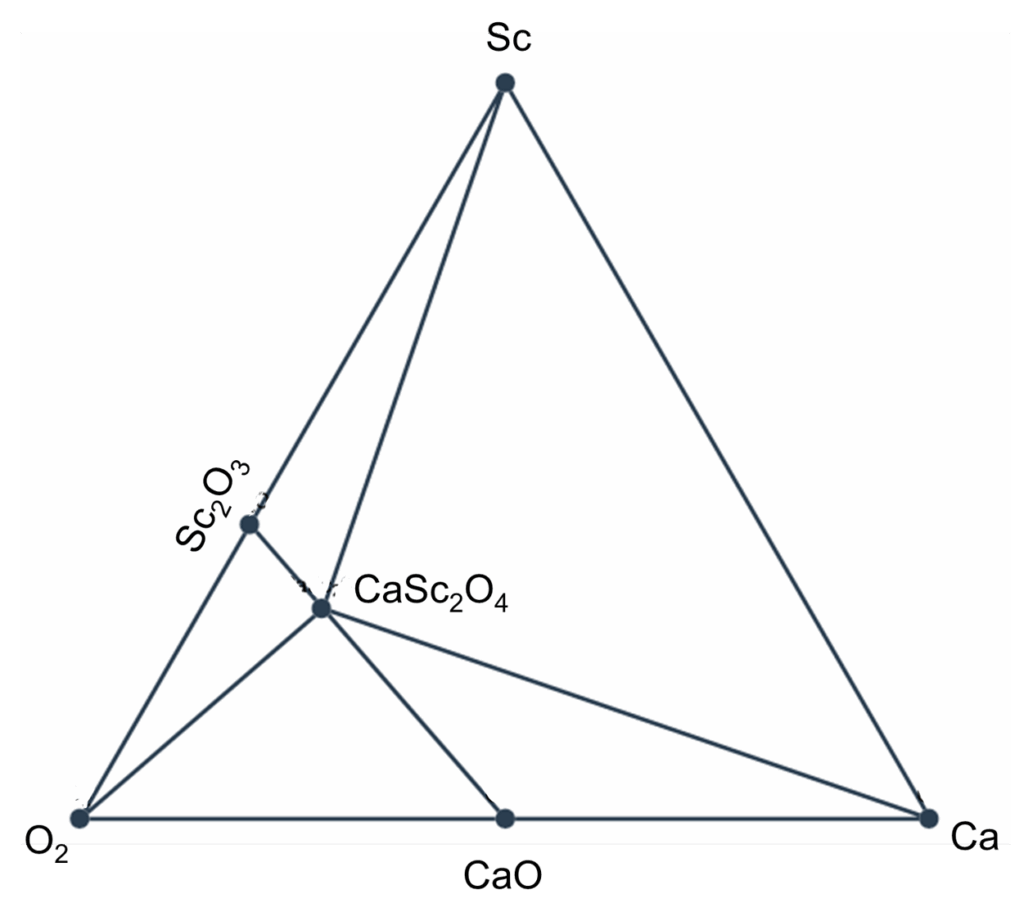
Despite solid state chemistry arguably being the oldest chemistry, the methods of synthesis used are rather prehistoric. The central paradigm of ‘gather the elements you want and heat them’ has not changed much in the past millennia. These methods work great if you are aiming to make the most stable combination of your elements-the thermodynamic ground state. Most of these stable states have been cataloged into phase diagrams, although there still exist several predicted stable phases which have yet to be realized.
In our group, we try to move away from traditional phase diagrams using various methods. One way to do this is by adding new dimensions to the diagram: we chose to carry this out by adding an external potential. Our electrofurnace can be used to influence redox conditions in-situ to unlock new pathways to functional materials. We also are interested in using the fields created to target polar materials which cannot be stabilized by other means. We also experiment with changing the reaction medium, and tuning kinetic factors to determine the effect of doing synthesis “wrong” on the properties of the materials.

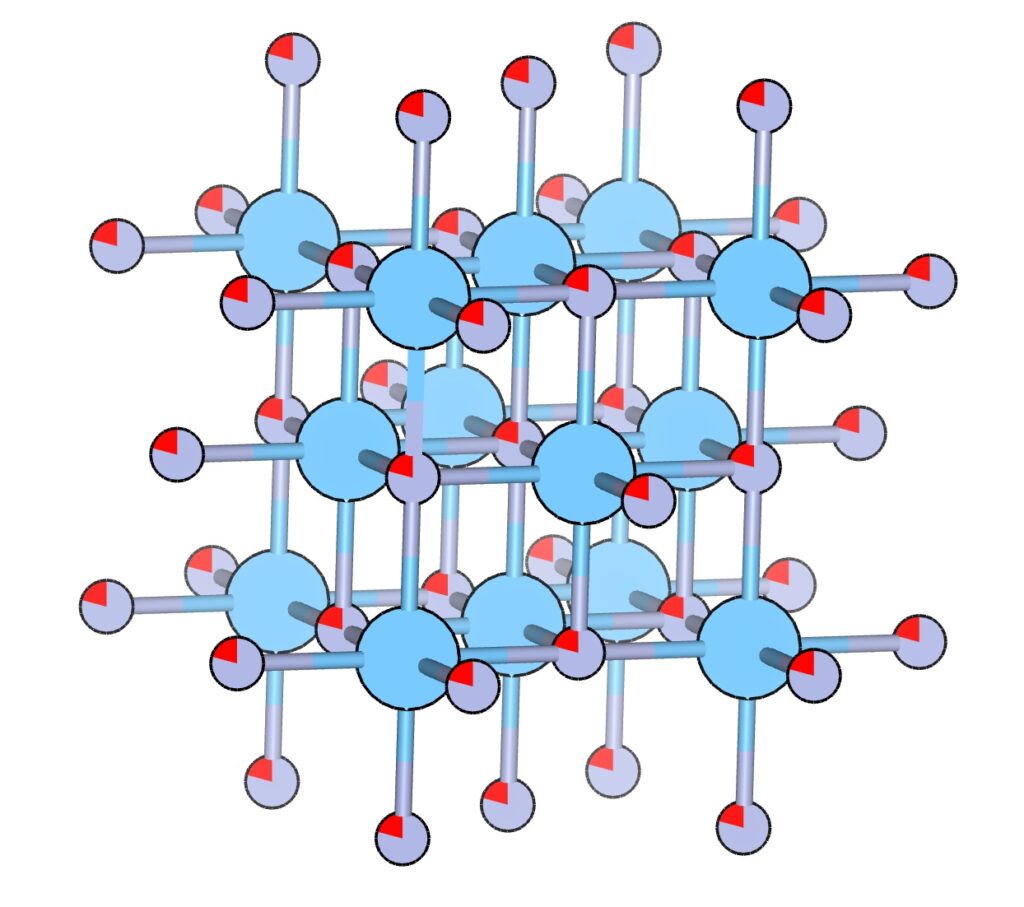
We love mixed anion materials: we currently have ongoing projects on oxynitride, oxysulfides and oxyfluorides. Precise control of anions within a structure can be tricky! If they occupy the same site within a structure, often variable concentrations can exist. These variations change the electronic properties and are often compensated by a change in oxidation state of the transition metals in the structure. These variations naturally cause drastically different properties which have yet to be fully understood. We are excited to be attacking problems such as these in our lab at the Université de Sherbrooke. Send us an email (allison.wustrow@usherbrooke.ca) to hear more about our latest work.